
Claus Atzenbeck

Dr. Claus Atzenbeck is a professor at Hof University, Germany, and research group leader for Visual Analytics at the Institute for Information Systems (iisys). He specializes in hypermedia information systems, including intelligent, recommender-supported hypertext interfaces with a focus on spatial hypertext, and applies them to domains such as storytelling, cultural heritage, creativity, and industrial knowledge management.
Furthermore, he serves the hypertext community as a long‑term member. Currently, he is SIGWEB’s Hypertext Liaison, a member of the ACM Hypertext Steering Committee, and a SIGWEB Executive Committee member. He also co‑organized the 30th‑anniversary ACM Hypertext Conference 2019 at Hof University, Germany, as General Chair.
Kate Pullinger

Kate Pullinger’s most recent works include the novel Forest Green, Doubleday 2020, and a ghost story for the smartphone, Breathe, which was created for the Ambient Literature Research Project. Kate has won many prizes, including Canada’s Governor General’s Award for Fiction in 2009 with The Mistress of Nothing and in 2021 the Electronic Literature Organisation’s Marjorie C Luesbrink Career Achievement Award. She is Professor of Creative Writing and Digital Media at Bath Spa University where she is Co-Director of the Centre for Cultural and Creative Industries. In 2024, she was elected as a Fellow of the Royal Society of Literature. Her new novel, The Recent Dead, will be published in 2027 and her second opera libretto, Yudina, will be performed in 2028. A full archive of her works is available on her website, www.katepullinger.com. A Canadian, she lives in London, England.
The Infinite Story Demanders
Kate Pullinger has worked across both traditional print fiction, publishing ten novels and three collections of short stories, and digital fiction projects. From her award-winning historical fiction, The Mistress of Nothing, to her field-defining work of Ambient Literature, Breathe, she has an unusual position in the parallel worlds of text-on-page and text-on-screen. In this keynote she will consider these forms, the many disruptions and dead-ends encountered along the way as well as the impact large language models are currently having on the ways we are told, and tell ourselves, stories.
Jay Bolter
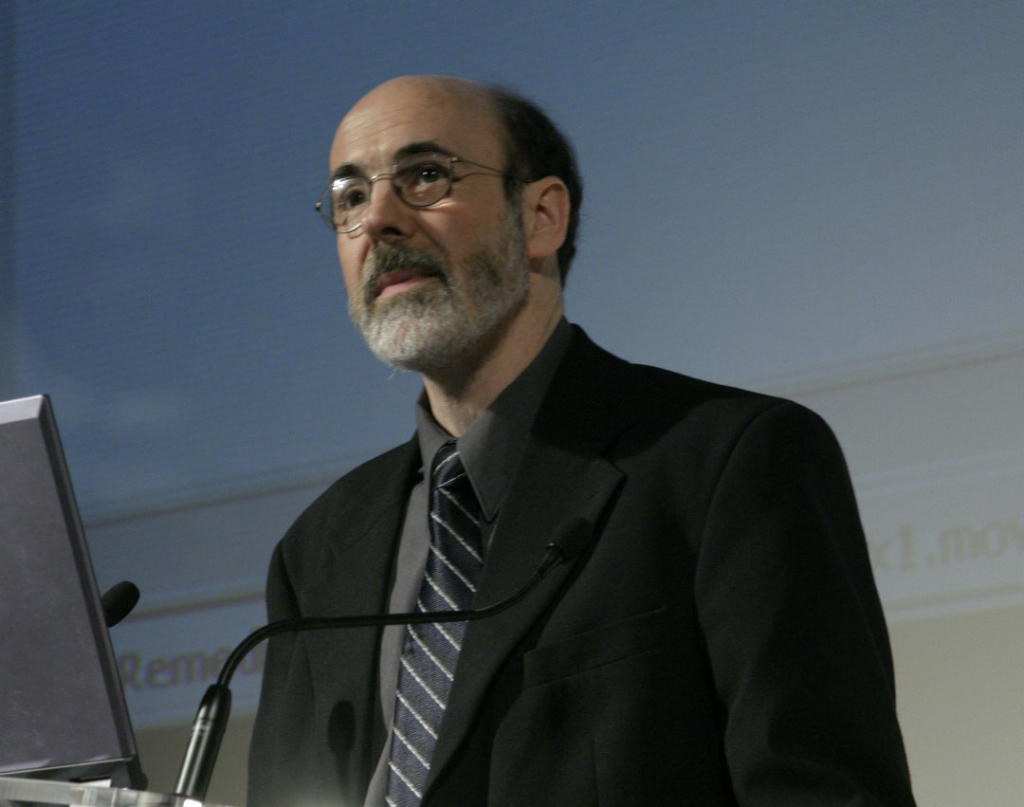
Jay David Bolter is now Professor Emeritus at Georgia Tech. In 2025, he retired as the Wesley Chair of New Media and co-Director of the Augmented Environments Lab. He has lectured extensively in North America and Europe and served as a guest professor at Malmö University in Sweden. His books include Remediation (with Richard Grusin), Windows and Mirrors (with Diane Gromala), The Digital Plenitude, and Reality Media (with Blair MacIntyre and Maria Engberg).
Generative AI and the future of hypertext
In the 1980s and 1990s, a group of authors and theorists regarded hypertext as an exciting new medium of expression, one that reconfigured the relationship between author, reader, and text. This claim was controversial at the time, and in fact the literary community as whole insisted and still insists on a more traditional notion of authorship. Nevertheless, over the past forty years, a smaller creative community has continued to produce a rich body of work responding to the affordances of digital technology: hypertext, hypermedia, e-literature and e-poetry.
With the advent of generative AI, we are now witnessing a reconfiguration in some ways more radical than the introduction of hypertext. If a classic hypertext already called into question the role and status of the author, the use of AI for generating or revising text further destabilizes that role. Luciano Floridi, Hannes Bajohr, and others have offered the term “distant writing” to describe new kinds of authorial practices in which one or several AI agents may be interposed between the human author and the eventual reader. The human might prompt an AI that in turn produces a prompt that produces the final text for the reader, perhaps in a real-time conversation with the reader. A human’s verbal prompt may create an image that in turn prompts a video or audio generator. The human author may participate throughout a chain of prompting or the whole process may be automated. As with the original hypertext movement, the very idea of AI authorship and creativity provokes a backlash. In this case the backlash is orders of magnitude greater, because the issue of AI creativity is just one of many social, political, economic and cultural issues raised by the rapid development and deployment of these AI systems. In the context of this conference, we may ask: How are the literary and artistic communities (creators, critics and audiences) responding to this new challenge to established notions of creativity and authority? What kinds of expressive experiments are already being made with and through generative AI. What do these experiments suggest for the future, as models become increasingly powerful? Does AI-mediated distant writing (and distant reading) constitute a new form of hypertext, or will generative AI supersede hypertext as a form of digital communication and expression?
Martin Eve
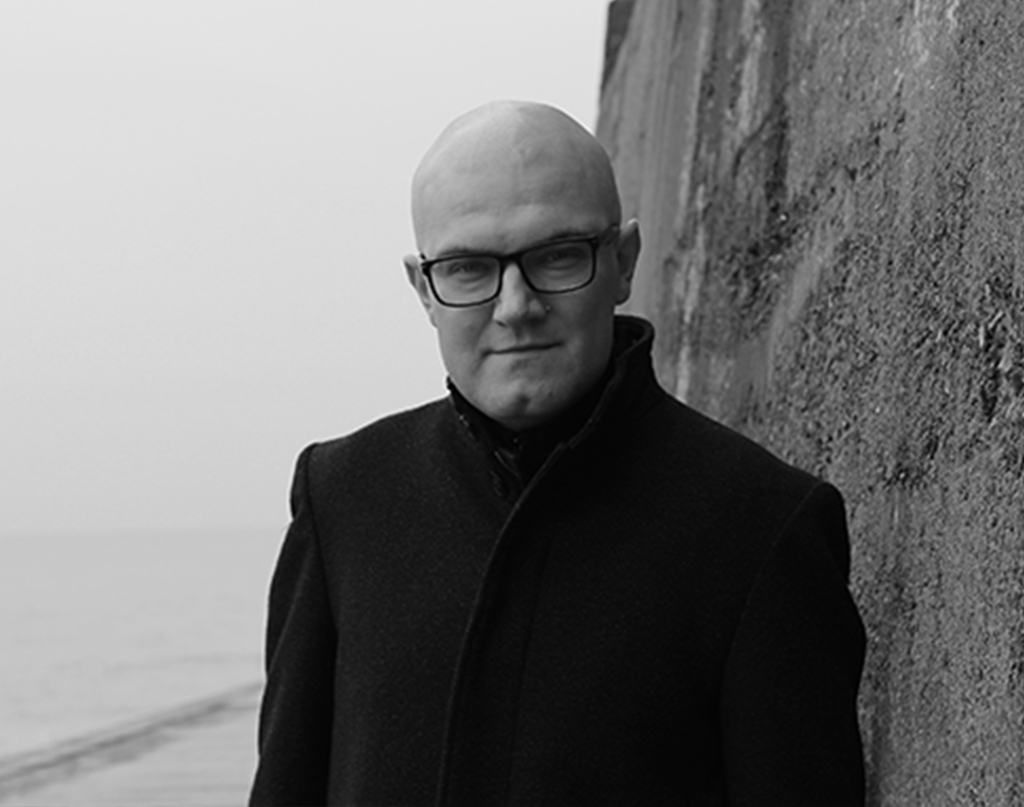
Martin Paul Eve is the professor of Literature, Technology and Publishing at Birkbeck, University of London and the Technical Lead of Knowledge Commons at Michigan State University. He is the author of 10 books but also widely known for his work on scholarly communications and open-access publishing. He is a co-founder of the Open Library of Humanities and a winner of the Leverhulme Prize, the SHARP Book History Prize, the KU Leuven Medal of Honour in the Humanities and Social Sciences, the Canadian Social Knowledge Institute’s Open Scholarship Award, and was named by the Shaw Trust as one of the 100 most influential disabled people in the UK.
Information Superhighway to Nowhere: “Persistent” Hyperlink Identifiers & Phantom Scholarly Objects
One of the defining traits of hypertext, and one of the aspects that has always made it an exciting concept, is the anarchic freedom for hyperlinks to point anywhere. Yet, at the same time, it is also possible for hyperlinks to point nowhere. Dead links, misconfigured servers, and defunct content are all possible outcomes of following a hypertextual trail.
In recent years, scholarly content that should be stable has been assigned a persistent identifier in the form of a DOI (a document object identifier). These identifiers, which are now displayed in the form of a hypertext hyperlink, are designed as an intermediate link redirect so that, in the event of null content at the destination, the DOI can, theoretically, be repointed to a new location for the same material.
However, in this context, DOI hyperlinks take on an authority. The independent metadata associated with them makes specific claims about their targets, beyond the control of the link. In this way such “hyperlinks” can instantiate phantom citation objects, describing targets that never existed and never will exist. Coupled with the growth of LLM-generated papers, and the rancid hallucinated claims for cited works therein, such phantom research objects proliferate throughout the scholarly record.
In this talk, Martin Paul Eve will explore the significance of these triangulated scholarly non-objects, what they mean for the authority claims of DOI hyperlinks, and the practical implications they imply, not least for digital preservation.